When it comes to securing expansive perimeters, the reliability of the support system is paramount. Star Pickets have emerged as the gold standard for agricultural and industrial fencing due to their unique geometry and exceptional load-bearing capacity. By providing a rigid, easy-to-install anchor point, these pickets ensure that fencing materials remain taut and secure even under extreme environmental stress.
Across the globe, the demand for high-efficiency fencing solutions has surged as land management becomes more complex. Whether it is protecting livestock in the Australian outback or securing industrial sites in Northern Europe, the implementation of Star Pickets solves the common problem of post-rot and instability associated with traditional wooden stakes. Their galvanized steel construction offers a longevity that drastically reduces maintenance costs over the lifetime of a project.
Understanding the technical specifications and application methods of these posts is essential for any project manager or landowner. By leveraging the strength of cold-rolled steel and advanced anti-corrosion coatings, these systems provide a scalable solution for everything from temporary boundaries to permanent high-security enclosures. This guide explores the comprehensive utility and evolving technology behind modern fencing supports.
Global Industry Context of Star Pickets
The global fencing market has undergone a massive shift toward steel-based solutions, with Star Pickets leading the transition in rural and industrial sectors. According to international trade data and ISO quality standards for metal products, the adoption of galvanized steel posts has increased by nearly 20% in the last decade, primarily driven by the need for rapid deployment in large-scale agricultural projects.
The primary challenge addressed by these products is the instability of soil and the volatility of weather. Traditional timber posts are susceptible to termites, fungal decay, and moisture absorption, which often leads to fence failure within 5 to 10 years. In contrast, the high-tensile strength of these steel pickets allows them to withstand significant lateral pressure without bending or snapping, ensuring a secure perimeter for decades.
Defining the Engineering of Star Pickets
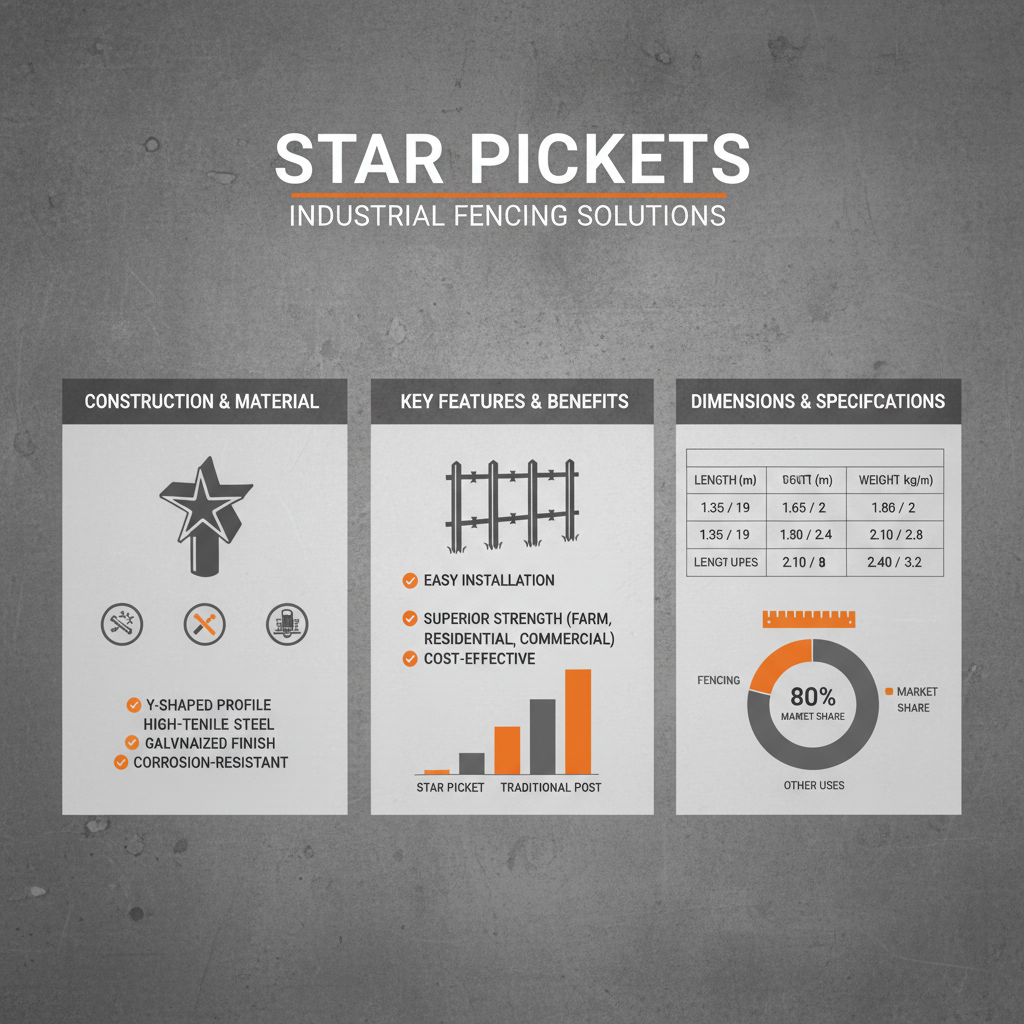
In simple technical terms, Star Pickets are cold-rolled steel posts characterized by a unique cross-sectional shape—often resembling a star or a "C" with reinforced ridges. This specific geometry is not merely aesthetic; it provides an optimal strength-to-weight ratio, allowing the post to resist twisting and bending forces more effectively than a standard round pipe.
From an industrial perspective, these pickets are designed to be driven directly into the ground using a post driver, eliminating the need for concrete footings in most applications. This makes them an indispensable tool for modern land management, where speed of installation and minimal environmental disruption are critical requirements for both commercial farms and government infrastructure projects.
Beyond their physical structure, they represent a fusion of metallurgy and practical design. By utilizing hot-dip galvanization, the steel is protected from oxidation, making these posts suitable for high-salinity coastal regions or humid tropical climates where ordinary metal would corrode rapidly. This engineering ensures that the infrastructure remains functional despite harsh environmental exposure.
Core Components and Durability Factors
The durability of Star Pickets is primarily determined by the quality of the raw steel and the thickness of the coating. High-grade carbon steel provides the necessary rigidity to support heavy-duty wire mesh or electric fencing, ensuring that the fence line remains straight over kilometers of undulating terrain.
A critical component is the galvanization process. By immersing the Star Pickets in a molten zinc bath, a metallurgical bond is formed that prevents rust from penetrating the core. This protective layer is essential for ensuring a lifespan that can exceed 30 years, even in acidic soil conditions.
Additionally, the "star" profile serves as a structural reinforcement. The ridges act as beams that distribute the tension of the fence wires evenly across the post's surface. This prevents the "bowing" effect common in lower-quality posts, maintaining the integrity of the security boundary regardless of the livestock pressure or wind loads.
Comparative Performance Metrics
When comparing different installation methods and material grades, the performance of Star Pickets consistently outperforms traditional alternatives. The efficiency of deployment is particularly noteworthy, as mechanical drivers can install a picket in seconds, whereas wooden posts require digging and manual tamping.
Furthermore, the load-bearing capacity varies depending on the gauge of the steel used. Heavy-duty variants are designed for high-tension boundary fences, while lighter versions are ideal for temporary vineyard supports or garden enclosures. The following data illustrates the relative performance ratings across various usage scenarios.
Performance Ratings for Different Star Pickets Variants
Global Applications and Use Cases
The versatility of Star Pickets makes them suitable for a wide array of global industries. In the agricultural heartlands of North America and Australia, they are primarily used for livestock containment and pasture division. Their ability to support high-tensile wire makes them the preferred choice for cattle and sheep farming, where strength and cost-efficiency are paramount.
Beyond farming, these pickets are frequently employed in remote industrial zones for temporary site security and perimeter marking. In post-disaster relief operations, they are used to quickly establish organized zones for shelters and supply depots, providing a stable structure that can be dismantled and reused once the crisis has passed. Their rapid-install nature is a critical asset in emergency logistics.
Long-term Value and Economic Advantages
Investing in high-quality Star Pickets provides a significant return on investment through the reduction of lifecycle costs. While the initial purchase price of steel may be higher than untreated timber, the absence of rot and the minimal need for replacement create a lower total cost of ownership over a 20-year period.
From a logical standpoint, the reliability of a steel-supported fence reduces the risk of livestock escape or security breaches, which can lead to costly losses or legal liabilities. The psychological peace of mind knowing that a perimeter is secured by industrial-grade metal fosters trust and stability for landowners and corporate facility managers alike.
Sustainability is another key advantage. Unlike chemically treated wood, which can leach toxins into the soil, galvanized steel is inert and fully recyclable. At the end of its long service life, the metal can be recovered and repurposed, aligning with global movements toward a circular economy and reduced environmental impact in the construction and manufacturing sectors.
Future Innovations in Metal Pickets
The evolution of Star Pickets is now being driven by materials science and digital transformation. We are seeing the introduction of hybrid coatings, such as zinc-aluminum alloys, which offer even greater corrosion resistance in extreme marine environments. These innovations ensure that fencing remains viable even in the most aggressive climates on Earth.
Furthermore, the integration of "smart fencing" is on the horizon. Some developers are experimenting with pickets that can house sensors to monitor fence tension or detect intrusions, sending real-time alerts to a centralized security system. This shift from passive support to active monitoring transforms the role of the picket from a simple stake into a component of a digital security network.
Automation in manufacturing is also optimizing the production process, allowing for more precise wall thickness and customized lengths. This reduces material waste and ensures that every picket meets strict tolerances, further enhancing the structural integrity of the overall fencing system.
Comparative Analysis of Star Pickets Technology and Materials
| Material Grade |
Coating Type |
Expected Lifespan |
Recommended Use |
| Low Carbon Steel |
Pre-galvanized |
10-15 Years |
Temporary Fencing |
| Medium Carbon Steel |
Hot-dip Galvanized |
20-30 Years |
Agricultural Boundaries |
| High Tensile Steel |
Heavy Zinc Coating |
30-50 Years |
High-Security Perimeter |
| Alloy Steel |
Zn-Al Alloy |
40+ Years |
Coastal/Marine Areas |
| Recycled Steel |
Eco-Powder Coat |
15-20 Years |
Sustainable Landscaping |
| Reinforced Steel |
Multi-Layer Galvanized |
35-45 Years |
Industrial Heavy Loads |
FAQS
Unlike wooden posts, star pickets are made from galvanized steel, meaning they are immune to termite attacks, fungal rot, and moisture degradation. They offer superior strength-to-weight ratios and can be installed significantly faster using a mechanical driver, removing the need for digging holes or using concrete, which reduces overall labor costs and environmental impact.
Depending on the galvanization quality, they can last between 20 to 50 years. For highly corrosive environments, such as coastal areas with high salt spray or acidic soils, we recommend using hot-dip galvanized or Zn-Al alloy coated pickets, which provide a much thicker protective barrier against oxidation compared to pre-galvanized options.
Yes, but they require insulation. Since steel is a conductor, you must use specialized plastic insulators to attach the electric wire to the picket. This prevents the current from grounding through the post, ensuring the fence remains energized and effective for livestock control or security purposes.
One of the biggest advantages of these pickets is their portability. They can be pulled out of the ground using a picket puller with minimal damage to the post. As long as the galvanization layer remains intact, they can be redeployed in a new location, making them an eco-friendly and cost-effective choice for temporary or shifting boundaries.
The choice depends on the tension of your wiring and the pressure expected from livestock. For heavy-duty boundary fences with high-tension wire, use a thicker gauge (heavy-duty) to prevent bending. For interior paddock divisions or light garden supports, a standard or lightweight gauge is sufficient and more economical.
In most cases, no. The designed shape and the method of driving them deep into the soil provide ample stability. However, for corner posts or end-strainer posts where the tension is highest, some users prefer to add a small amount of concrete or use a diagonal stay-post to ensure the fence remains taut over time.
Conclusion
In summary, Star Pickets represent a critical evolution in perimeter security and land management. By combining the strength of high-tensile steel with the longevity of advanced galvanization, they solve the perennial problems of post decay and installation inefficiency. From their ability to withstand extreme environmental pressures to their role in sustainable, recyclable infrastructure, these posts provide an unmatched balance of performance and economic value.
Looking forward, the integration of smart sensors and even more durable alloy coatings will likely redefine the boundaries of what fencing can achieve. For landowners, industrial managers, and agriculturalists, transitioning to a high-quality steel support system is not just a matter of convenience, but a strategic investment in the long-term security and stability of their assets. To explore our professional range of fencing solutions, visit our website: www.huaxinmesh.com